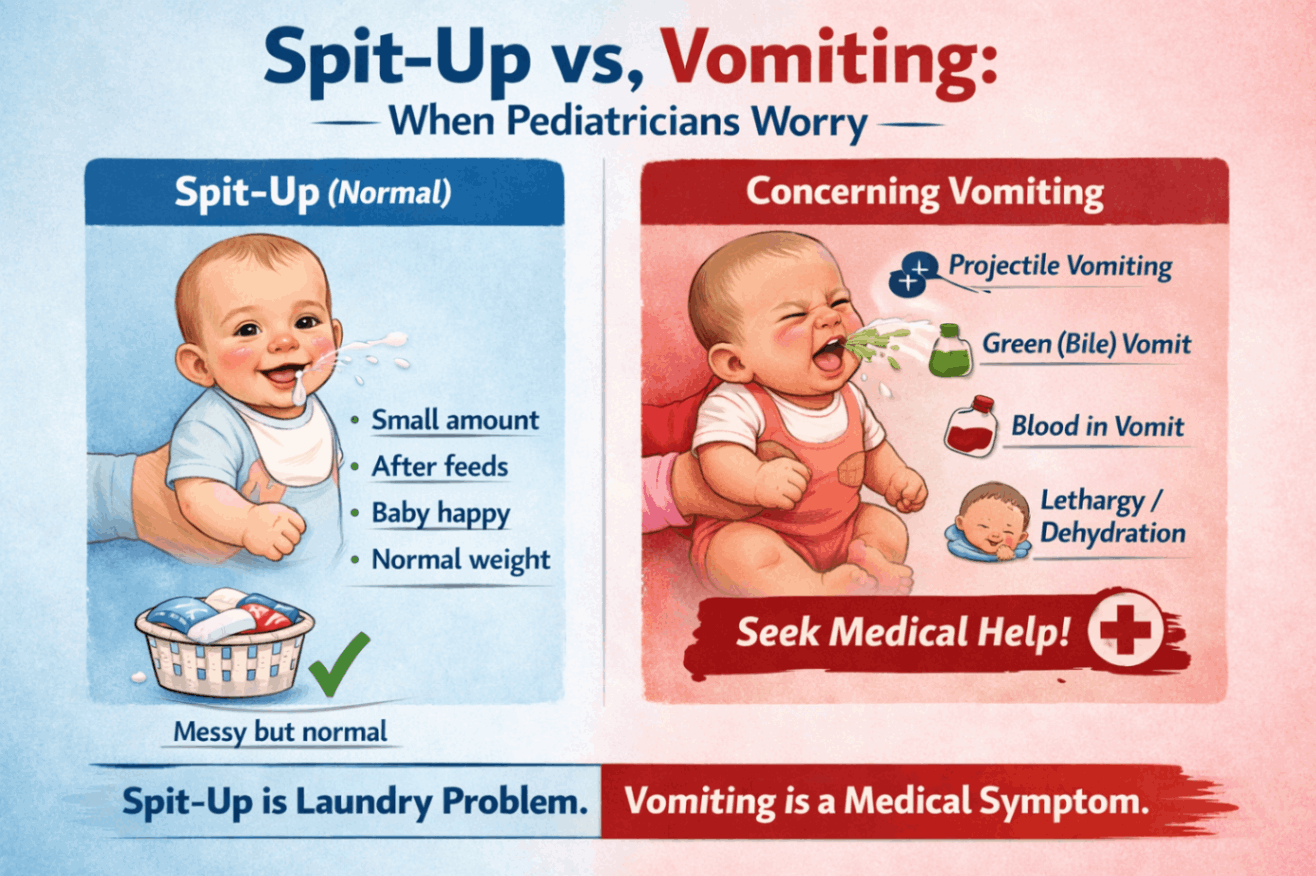

















Spit-up vs Vomiting — When Pediatricians Actually Worry
By a pediatric healthcare professional
Parents quickly learn that babies and milk go hand in hand… on clothes, shoulders, and sometimes the floor. Many caregivers panic the first time their baby spits up, fearing illness or stomach problems. In reality, most babies spit up — and most of the time it is completely normal.
However, true vomiting is different. Knowing the difference helps parents stay calm when it’s harmless and act fast when it’s not.
1. Spit-up: A normal part of infancy
Spit-up (also called reflux or regurgitation) happens because a baby’s digestive system is still immature.
The muscle between the esophagus and stomach — the lower esophageal sphincter — is weak during the first months of life. Milk easily flows back up, especially after feeding.
Typical features of spit-up
- Small amount of milk dribbles out
- Happens shortly after feeding
- Baby remains calm and comfortable
- No crying or distress
- Baby continues feeding normally
- Normal weight gain
- More common when burping or lying flat
Many babies spit up multiple times a day but are perfectly healthy. Pediatricians often call them “happy spitters.”
Spit-up usually peaks around 2–4 months and improves once babies sit upright and begin solids (around 6 months). Most outgrow it by 9–12 months.
👉 If your baby smiles after spitting up, it is almost always harmless.
2. Vomiting: The body trying to tell us something
Vomiting is a forceful reflex controlled by the brain — not just milk coming back up, but the stomach actively emptying.
This is when pediatricians start paying attention.
Typical features of vomiting
- Forceful or projectile (shoots out)
- Larger volume
- Baby looks uncomfortable or cries
- Happens repeatedly
- Feeding refusal afterward
- May include fever or lethargy
Vomiting suggests infection, blockage, intolerance, or another medical condition.
3. The most important warning signs 🚨
Parents don’t need to memorize diseases — just watch for these red flags.
Call your pediatrician urgently if your baby has:
Color changes
- Green vomit (possible intestinal blockage — emergency)
- Yellow bile
- Blood or coffee-ground appearance
Behavior changes
- Weak, floppy, unusually sleepy
- Persistent crying with pain
- Refusing feeds repeatedly
Hydration problems
- Fewer wet diapers (less than 4–5/day after newborn stage)
- Dry lips or mouth
- Sunken soft spot
Vomiting patterns
- Projectile vomiting every feed
- Vomiting starting suddenly after weeks of being fine
- Vomiting plus fever
- Vomiting plus diarrhea in very young infants (<3 months)
Growth concerns
- Poor weight gain
- Weight loss
4. A special case pediatricians watch closely: projectile vomiting in young infants
Between 3–8 weeks old, repeated strong projectile vomiting after feeding may signal pyloric stenosis — a narrowing of the stomach outlet.
Parents often describe it as:
“The milk shoots across the room.”
Babies remain hungry afterward but cannot keep milk down.
This condition requires medical treatment — not home remedies.
5. What parents can safely do for normal spit-up
For healthy babies with simple reflux:
- Feed smaller amounts more frequently
- Burp during and after feeds
- Hold upright for 15–20 minutes
- Avoid tight diapers around the abdomen
- Don’t overfeed
- Place baby on back to sleep (always — even with reflux)
Important: Do not thicken feeds or change formula without medical advice.
6. The reassuring truth
Spit-up looks dramatic but is rarely dangerous.
Vomiting looks similar but behaves differently.
Pediatricians worry less about the mess — and more about the baby’s behavior, hydration, and growth.
So instead of asking:
“How much milk came out?”
We ask:
“How is your baby acting afterward?”
That answer usually tells us everything.
Quick summary
SituationUsually safeNeeds medical attentionSmall dribble after feeds✔Happy baby✔Good weight gain✔Forceful/projectile✔Green/yellow/bloody✔ EmergencyLethargy or dehydration✔Persistent repeated vomiting✔
Parenting includes lots of laundry — and sometimes worry.
Knowing the difference between spit-up and vomiting lets you focus on what truly matters: a comfortable, growing, and thriving baby.